By: Joshua Plaschkes
The American intelligence community has changed considerably since 9/11 in order to combat the asymmetric threat the U.S. now faces. Over the past decade, the intelligence community’s focus on a grand strategy for combating terrorism has evolved into an increasingly symbiotic relationship with the military and paramilitary in their tactical operations. This trend has moved away from capturing and interrogating terrorists, to quickly eliminating them once found. In order to strike with pinpoint accuracy, U.S. intelligence has been increasingly involved in Special Forces and drone strike operations, illustrating the “tacticalized” nature of the intelligence community. The question is, should this be the guiding mission for the U.S. intelligence community?
R. James Woolsey, former Director of the Central Intelligence Agency (CIA), views the “tacticalization” of the intelligence community as problematic. The U.S.’s policy on what to do with a captured terrorist is analogous to the catch and release of trout. If a suspected terrorist is captured, he may be interrogated briefly, but is then released to go back to fight U.S. and coalition troops, if he so chooses. This policy has led to an institutional evolution of the CIA and Special Forces to forgo capturing and interrogating, placing a larger emphasis on immediately killing the terrorists. Woolsey states that part of the problem is the U.S. has not found a way to morally deal with captured terrorists. This is a career ending path for those in the CIA and Special Forces because they are left to decide what they will do when a terrorist is captured. Do you let the terrorist go to fight U.S. forces another day, and if not, where should they be sent? It has become easier to kill the terrorists due to the ambiguous nature of the U.S.’s policy. Woolsey clearly believes the emphasis for the intelligence community should not be on tactical operations, but rather the capture and interrogation of terrorists.
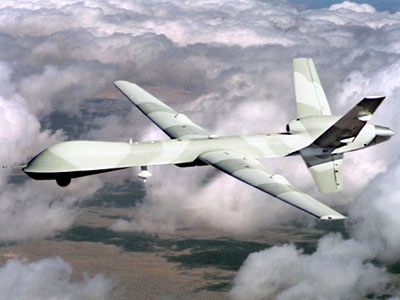
Mark Lowenthal, PhD, President and CEO of the Intelligence & Security Academy, LLC., agrees that there has been a significant “tacticalization” of the U.S. intelligence community. Yet, he specifically points to the President’s directives as the source of the problem, not the policy itself. National security agencies, such as the CIA and NSA, do what the President tells them to do. The fourfold increase in the use of Predator drone strikes under President Barack Obama, compared to his predecessor President George W. Bush, is illustrative of the intelligence community’s focus on tactical strikes versus the formulation of a grand strategy. This is a result of the way the President has directed the U.S. national security forces to fight an asymmetric war. Lowenthal pointed to the problematic nature of this “tacticalization” for those coming into the intelligence community. They will be unable to make a career studying potential international threats, such as a militarily aggressive China, but will be immersed in pinpointing what house a drone should strike. This trend is unlikely to change into the foreseeable future, but a transition away from a “tacticalized” intelligence community is necessary. When this does occur it will be detrimental to those in the intelligence community who will need to make the institutional transition.
Both Woolsey and Lowenthal’s assessments on why the U.S. intelligence community has become increasingly “tacticalized” in a post-9/11 world accurately assess the root causes of this transition. Since the implementation of policy is largely a result of Presidential direction, the two lecturers are pointing to the same issue, the President’s ambiguous policy on captured terrorists, and came to the same conclusion, the “tacticalization” of U.S. intelligence needs to be changed. The problem has been exacerbated by the strongly divergent views of the President and his opponents on what to do with captured terrorists. While the President believes newly captured terrorists should be put on trial in the U.S. judicial system, the President’s opponents believe the terrorists should be held at Guantanamo Bay and put on trial by military tribunals. This has led to a standstill in policy and an inability to implement any significant reform. The problem with simply killing an identified terrorist without any prior interrogation is the loss of valuable intelligence he/she may have on current and upcoming terrorist activities. Although it is comforting to know that terrorists are meeting the ultimate justice for their crimes, the “tacticalized” nature of the intelligence community, resulting from an ambiguous U.S. policy, may be hindering the gathering of intelligence that could prevent the next terrorist attack. There will always be a terrorist that need to be taken out, but the structure of terrorist organizations lead to a “whack a mole” scenario, where if you take out the top terrorist leader, there will always be a replacement. The U.S. requires a grand strategy to defeat the ideology of terrorist organizations, “tacticalization” is only a temporary fix to a larger problem.
 Policy Interns
You must be logged in to post a comment.