Ever since the members of the U.S Business Roundtable presented their plan to gradually raise the retirement age to seventy last year, the political and economic realm has been on fire with both support and recrimination. This fervor has only intensified after a recently released report by the Congressional Budget Office (CBO) which stated that, holding … Continue reading
Category Archives: Debt
Uncontrolled Debt, Unprepared Students. Regulations on Career-Colleges Attempt to Control the Trend.
In May of 2014, President Obama proposed that the Administration take steps to address the large number of students who enroll in for-profit college career programs that graduate with little experience, skills that were less than spectacular and high amounts of debt. These programs are leaving students with little option but to default on their … Continue reading
Deficits and the Business Cycle: Why We Should Still Worry About the Deficit
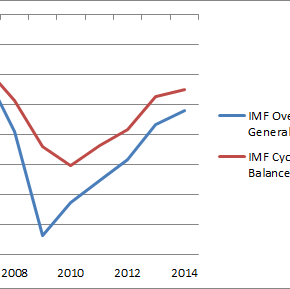
Why we should Still Worry about the Deficit On October 15, the Department of The Treasury released the final budget results from Fiscal Year (FY) 2014. The results showed an overall deficit of $483 billion, $197 billion less than in 2013 ($680 billion), which amounts to a reduction of the deficit as a percentage of GDP … Continue reading
Millennials Down Under More Likely to Boomerang
Since the dawn of the New Millennium, the portion of 25 and 30 year olds living with their parents has followed an unbroken, almost linear upward trajectory. A national survey found that 38 percent of 18 to 29-year olds are living in their childhood rooms. As parents across the country wonder when their recent graduates … Continue reading
Pay As You Earn: Not the Solution to Student Debt Crisis
President Obama’s expansion of the Pay As You Earn program for student loan payment while earning support still fails to fix the root of the student debt problem. The expansion allows for more people to become eligible for their student loan payments to be capped at 10 percent of their monthly income, which is based … Continue reading
The Affordable Care Act Aims High for Fiscal Irresponsibility
In budgetary terms, the Affordable Care Act (ACA) is anything but affordable. Though well-intentioned, it expands a poorly designed program and adds significant spending during a time of slow economic growth. This attempt to improve and expand health coverage to uninsured Americans is unduly expensive. In an already strained fiscal climate where the federal budget has reached … Continue reading
HUD’s Latest Proposal Brings Moral Hazard into Rental Housing
The 2008 Financial crisis was a costly lesson in the dangers that come with subsidizing risk. Fannie Mae and Freddie Mac are well recognized as the principal creators of moral hazard by reimbursing investors that held mortgage-backed securities when homeowners failed to make payments on their mortgages. Yet only five years after the worst of … Continue reading
Egoism Over Action: The Thoughtlessness Behind the Latest Budget Talks
For those in the D.C. metro area, this month has been pretty normal. Employees were furloughed. The government shut down. Partisan bickering continued. The city was placed on high alert after a failed attempt to break through White House security, which led to a car chase down Constitution Avenue. Congressmen realized their approval ratings would … Continue reading
4 Reasons Why the Reinhart-Rogoff Fiasco Doesn’t Change Anything
Two weeks ago, a grad student at UMass Amherst discovered a spreadsheet error in the Reinhart-Rogoff (R-R) paper, a paper that many austerity advocates cited as proof that too much debt cripples economic growth. In the days and weeks after the spreadsheet error fiasco, many were quick to draw significant implications from this event, calling … Continue reading
High Percentage Rate of Uninsured Population Across the United States
Last week, Gallup released a report analyzing 43 U.S. Metropolitan areas and found that more than one in five Americans are uninsured. The study looked at the top 10 areas with the highest percentage rate of uninsured individuals, not surprisingly, located in highly populated states: California, Florida, Texas, Nevada, and Washington. The survey was among … Continue reading
You must be logged in to post a comment.