Just seven years ago, “aid in dying” or “assisted suicide,” was illegal throughout the United States with the exception of Oregon. Today, five additional states have passed “death with dignity” bills that allow terminally ill patients to choose to die with the help of their physician. Many praise this legislation for allowing patients who are … Continue reading
California’s Proposition 45: Why it Failed and Its Indictment on the Affordable Care Act
Tuesday (November 4) was a big day for the Republican Party, gaining seven seats in the Senate giving them control of both chambers of Congress. In all of the excitement about the momentum change in federal politics, there was a proposition being voted on in California that went relatively unnoticed when it should not have. … Continue reading
The Most Extraordinary Aspect of the Election is Not What You think!
Following an election, market participants strive to explore the new political landscape. Pundits are commenting, and slowly but surely, people discover what the new landscape looks like. Interestingly though, if you ask political economists (sometimes called Public Choice economists) the most fascinating aspect of an election is perhaps not what parties gain control of which houses of … Continue reading
MetLife Disavows “Systemically Important” Proposal
MetLife, a nonbank financial company (NFC) and the largest insurer in the U.S., called for a hearing Monday to oppose being labeled “systemically important.” After the Financial Stability Oversight Council (FSOC), a major financial watchdog, voted in favor of adding MetLife to the list of systemically important financial institutions (SIFIs) in September, the firm hustled … Continue reading
HFT Firms Manipulating NASDAQ
Threatening equity markets, stock manipulation is among the hottest topics for investors today. Michael Lewis, author of Flash Boys: A Wall Street Revolt, describes the U.S. stock market as rigged in favor of High Frequency Trading (HFT) firms. In a 60 Minutes edition, Lewis stated that these firms are able to “identify your desire to … Continue reading
Uncontrolled Debt, Unprepared Students. Regulations on Career-Colleges Attempt to Control the Trend.
In May of 2014, President Obama proposed that the Administration take steps to address the large number of students who enroll in for-profit college career programs that graduate with little experience, skills that were less than spectacular and high amounts of debt. These programs are leaving students with little option but to default on their … Continue reading
How Can International Students Boost the U.S. Economy? – Part II
Many international students have been leaving the United States after successful completion of their studies. The vast majority of them have been worried about obtaining visas and jobs in fields of their interest since the U.S. current immigration system does not offer any feasible way of how to stay in the country after graduation. Although … Continue reading
How Will the IMPACT Act Impact Hospice Care?
President Obama signed the IMPACT Act into law on October 6. The law had overwhelming bipartisan support and will bring increased federal oversight to hospice programs across the country. The legislation mainly addresses how nursing homes, rehab-centers, and home health agencies assess and report data on quality and other measures. However, buried in the new law … Continue reading
There is a Health Law?
Recently, the Kaiser Family Foundation conducted a poll to judge the American public’s knowledge and opinion of the Affordable Care Act. Perhaps the most outrageous result from this poll is that, of those individuals uninsured, nearly 9 out of 10 of them did not know that open enrollment begins in November. Almost ninety percent of … Continue reading
Deficits and the Business Cycle: Why We Should Still Worry About the Deficit
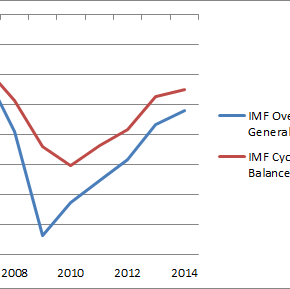
Why we should Still Worry about the Deficit On October 15, the Department of The Treasury released the final budget results from Fiscal Year (FY) 2014. The results showed an overall deficit of $483 billion, $197 billion less than in 2013 ($680 billion), which amounts to a reduction of the deficit as a percentage of GDP … Continue reading
You must be logged in to post a comment.