The State of Social Security Social Security’s retirement trust fund runs out of reserves in late 2032. After that, incoming payroll taxes cover about 78 percent of scheduled benefits, an automatic 22 percent cut, unless Congress acts first. The trust fund is not a reserve of cash. It holds Treasury securities. For roughly 25 years Social Security … Continue reading
Tag Archives: Economy
Hedging Their Bets, BRIC by BRIC: How Trump’s Tariffs Have Incentivized Diversification
Executive Summary Intra-BRICS trade was growing well before recent trade tensions, but U.S tariff escalations have accelerated efforts by BRICS+ members to diversify away from U.S.-centered trade. Trade among BRICS countries increased from $84 billion in 2003 to $1.17 trillion in 2024, at an annual rate of 13.3 percent—more than twice the pace of global … Continue reading
Why Young Americans Must Turn from Government Intervention and Reform Entitlements
Executive Summary The national debt is fundamentally a generational issue; running large budget deficits to finance tax cuts or spending increases today places an undue burden on younger and future generations. By borrowing more today, policymakers are effectively promising higher taxes and lower spending on future taxpayers and government beneficiaries; at the very least, younger and future … Continue reading

“I Got a Rock”: Policy Gaps in American Critical Minerals Stockpiling
Executive Summary Throughout 2025 and 2026, China has leveraged its control over critical mineral supply chains, forcing the United States to the negotiating table; the resulting shortages caused disruptions in the production of goods from automobiles to computers. In February 2026, the Trump Administration inaugurated Project Vault, a critical minerals stockpiling program intended to reduce exposure to foreign-induced supply shocks through storing minerals for civilian use. Although Project Vault is … Continue reading

Wishing To Overhaul: American-Led WTO Reform Post-MC14
Executive Summary Last week, the World Trade Organization (WTO) concluded its 14th Ministerial Conference (MC14) to plan the institution’s agenda for the next two years. Reform was front-of-mind for all members, including the United States; its vision for the WTO focuses on constraining developing member privileges, ensuring leeway for security-based trade measures, and making member commitments more flexible in general, differing markedly from other proposals like that of … Continue reading

Pax Moo-ica: Supply Management and the USMCA
Executive Summary One of the United States’ main goals for the 2026 United States-Mexico-Canada Agreement (USMCA) review is to open the supply-managed Canadian dairy market. This has been a continuous objective of Washington’s for decades; since 2020, inroads have been achieved, but the scope of such market openings seems unlikely to change in the contemporary geopolitical situation. For these … Continue reading

Mercosur: An Integration Problem
Executive Summary Mercosur and the European Union have signed a sweeping free trade agreement twenty-six years in the making; that same month, Argentina signed its own bilateral trade deal with the United States. Despite the optimism surrounding the EU deal, Mercosur is still hamstrung by institutional limitations and diverging member interests, preventing further integration. Given this, U.S. trade policymakers are apt to treat Mercosur members as the individual … Continue reading
Price Controls and Critical Minerals: Understanding the U.S.’s Rare Earth Economic Policies
Executive Summary: In response to the Chinese government’s threated export controls on rare earth minerals, the Trump administration has signed frameworks for cooperation on rare earth mining and processing with several countries. Almost all of these frameworks specifically mention price floors and other pricing controls as a potential policy tool. Though China is certainly engaging … Continue reading
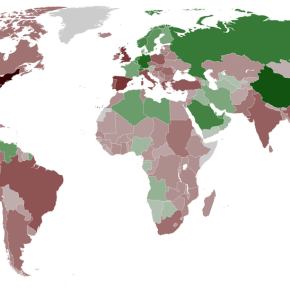
Money Supply and the Current Account: Testing the Predictions of the AA-DD Model
Executive Summary: Policymakers have increased attention to current account deficits. Though experts debate whether current account deficits negatively impact the economy, many have also put forward theories regarding the influence of money supply on the current account. The classic AA-DD model predicts that in the short term, an increase in money supply should result in … Continue reading

The Impact of AI Efficiency Gains on National Debt and Gross Domestic Product
Aryan Mirchandani Executive Summary The recent AI boom has prompted policymakers to forecast exponential GDP growth in the near term, easing pressure on officials to act against rising national debt levels. The Trump Administration has utilized the AI efficiency boom to continue large levels of fiscal spending, as it implores that this boom will decrease … Continue reading


You must be logged in to post a comment.