It’d hardly be a stretch to say that the Obama administration is on the wrong side of most energy issues. But when they get something right, we should give them credit. The US Department of Energy’s recent decision to require FERC approval before being awarded liquefied natural gas export licenses is a case in point. … Continue reading
Category Archives: Energy
Renewables vs. Conventional Energies: How to Make Them Work Together?
The Climate Change threat doesn’t leave us much choice but to transform our current economy into a “low carbon economy”. While it is well acknowledged that renewable energy (RE) sources like solar, wind or even biomass could lead us towards that goal, conventional energy sources like coal, natural gas or oil will still play a … Continue reading
Coal: A Bridge to the Future
Many are those that believe that coal is an obsolete technology that is not or should not be used in this advanced 21st century world. Let’s be honest, at first sight coal doesn’t really look like anything attractive. It is a black-brownish sedimentary rock that causes many miners to develop black lung disease due to … Continue reading
Natural Gas Export…Shale we?
The Marcellus Shale is the name given to a geologic formation of sedimentary rocks, located in the North East of the United State of America. It is yet unclear on how much Natural Gas is contained in these rocks, however in 2012, the Environmental International Agency (EIA) estimated the unproved technically recoverable reserves to be … Continue reading
The Keystone XL Pipeline, really in our interest?
The current crisis in Crimea symbolizes a world where energy security became, more than ever, a key aspect of a nation’s economy. Here in the USA, the construction of the Keystone XL pipeline is currently the most animated debate related to the energy issues. Most Americans are in favor of its construction, as they see … Continue reading
Keystone Pipeline: The Time to Act Is Now
President Barack Obama, in his State of the Union address, mentioned the administrations efforts to reduce America’s energy dependence on foreign nations. The president’s energy section in the State of the Union was small, lackluster and dodgy. The president avoided any mention of one of the best ways for the U.S. to increase our import … Continue reading
EPA Holds Listening Sessions on Carbon Regulations – But Who Are They Listening To?
The EPA recently held 11 sessions for public input on the agency’s new rules to restrict carbon emissions from existing power plants. While large coal interests and major labor unions were represented, the vast majority of attendees represented environmental advocacy groups (or themselves) and favored regulation. Some might suggest that this indicates broad support for … Continue reading
Hydraulic Fracturing Controversy: An Opportunity for the United States to Lead and Set the Record Straight
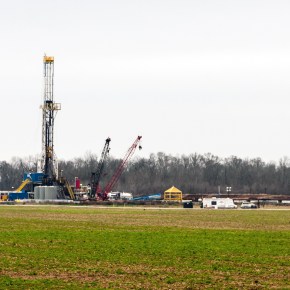
New estimates released Friday, October 4, by the Energy Information Administration (EIA), shows the United States (U.S.) pulling ahead of both Saudi Arabia and Russia in oil and natural gas production in 2013. There’s no doubt that this rise to the top is a result of recent development in a new drilling technique known as fracking, … Continue reading
Gas Prices are Down, Will They Stay This Way?
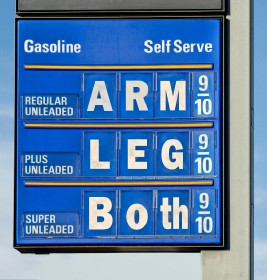
Gasoline prices, like prices of any commodity, are determined by many factors including supply-and-demand, government policy and even the weather. Gasoline is unique, however, because it is very nearly the only energy source used in transportation. Its monopoly on transportation amplifies the impact its price has on the economy. Low gas prices translate to more … Continue reading
New Fracking Study is Good News for Natural Gas Industry
On September 16, University of Texas Austin released a study showing that shale gas production releases fewer methane emissions than previously thought. If true, the study’s findings could swing the debate over hydraulic fracturing—a technique used to extract gas from shale formations—in favor of the natural gas industry. In the last five years, developments in … Continue reading
You must be logged in to post a comment.