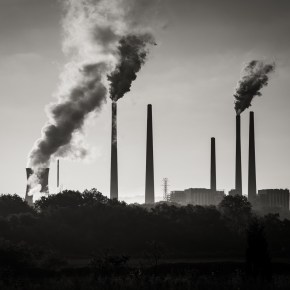
When the Environmental Protection Agency (EPA) revised current ozone emission standards in 2015, the agency’s regulatory impact analysis failed to quantify production losses for manufacturing. This study leverages the EPA’s attainment threshold to show that current ozone regulations lower revenues for manufacturing firms by an average of $277 million annually. Findings indicate that the EPA’s impact analysis underestimates realized economic effects, generating both economic and regulatory policy implications. Continue reading
Category Archives: Environmental Regulation
Impact of Retail Electricity Deregulation on Consumer Prices: A Difference-in-Difference Approach
Executive Summary Introduction Electricity has become the most fundamental commodity in the United States. Its growing influence underpins nearly every major industry. It powers homes, infrastructure, and manufacturing. Innovation and technological development for the entire economy depends on efficient and reliable energy transmission. Utilities markets in the U.S. have historically been viewed as natural monopolies. … Continue reading
Meat Industry Challenged by New DGAC Report
Do you love coffee but also love red meat and dessert? If so, there’s good news and bad news. On Thursday, February 19, the Dietary Guideline Advisory Committee (DGAC) released a lengthy 571-page report of suggestions to the Department of Heath and Human Services (HHS) and the U.S. Department of Agriculture (USDA). The report explained … Continue reading
Creating a National Dialogue About Sustainable Green House Gas Reduction
As star-studded protests are lining the streets of New York in Manhattan and on Wall Street, it appears that an international debate has been stirred about the importance of protecting the environment. However, while the United Nations met this week to discuss how this goal can be reached, the reality of a national debate in … Continue reading
Keystone Pipeline: The Time to Act Is Now
President Barack Obama, in his State of the Union address, mentioned the administrations efforts to reduce America’s energy dependence on foreign nations. The president’s energy section in the State of the Union was small, lackluster and dodgy. The president avoided any mention of one of the best ways for the U.S. to increase our import … Continue reading
Who Will Replace King Coal?
On Wednesday, President Obama gave a speech at Georgetown University announcing a new climate change policy. The announcement fulfills a promise he made in his State of the Union Address to move forward with executive regulation if Congress failed to act on climate change. It also makes good on his promise to bankrupt the coal … Continue reading
Absinthe and Our Obsession with “Scary” Chemicals
For those who don’t know, absinthe is a grain alcohol of Swiss origin which is made by macerating herbs and spices, the most important of which are fennel, anise and wormwood. The first two give absinthe its characteristic licorice flavor. Wormwood imparts a bitter flavor and is the source of absinthe’s famed mystique and jade-green … Continue reading
Geopolitical Impacts and Pokemon: Looking for a Bipartisan Voice Amidst an Oil Boom
The Bipartisan Policy Center recently hosted an event discussing the geopolitical impacts of the US’s recent tight oil boom. Tight oil, or shale oil, production has increased with the expansion of hydraulic fracturing technology used to access shale gas from shale or sandstone formations. Amidst the rallying cries of a “qualified abundance” instead of a … Continue reading
A “Leak” in CAFE Raises Questions Over Regulatory Analysis
The federal government employs people of many different professional backgrounds, but among them you will not find fortunetellers. Yet scientists, analysts, and lawyers could sometimes use an assist from seers in completing the work they are asked to do. Conducting cost-benefit analyses of agencies’ proposed regulations necessitates predicting their impact on the economy, an unfathomably … Continue reading
The Lesser of Two Prairie Chickens
In a previous post, I wrote about the challenges of balancing economic and environmental interests when crafting regulatory policy. I argued that while regulations often incur significant economic costs, more regulation doesn’t necessarily translate into greater environmental benefits. This issue came up at a House Natural Resources Committee hearing on Tuesday about state and federal approaches … Continue reading
You must be logged in to post a comment.