Executive Summary Throughout 2025 and 2026, China has leveraged its control over critical mineral supply chains, forcing the United States to the negotiating table; the resulting shortages caused disruptions in the production of goods from automobiles to computers. In February 2026, the Trump Administration inaugurated Project Vault, a critical minerals stockpiling program intended to reduce exposure to foreign-induced supply shocks through storing minerals for civilian use. Although Project Vault is … Continue reading

Author Archives: Michael Marion
Wishing To Overhaul: American-Led WTO Reform Post-MC14
Executive Summary Last week, the World Trade Organization (WTO) concluded its 14th Ministerial Conference (MC14) to plan the institution’s agenda for the next two years. Reform was front-of-mind for all members, including the United States; its vision for the WTO focuses on constraining developing member privileges, ensuring leeway for security-based trade measures, and making member commitments more flexible in general, differing markedly from other proposals like that of … Continue reading
Pax Moo-ica: Supply Management and the USMCA
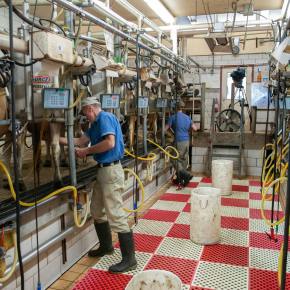
Executive Summary One of the United States’ main goals for the 2026 United States-Mexico-Canada Agreement (USMCA) review is to open the supply-managed Canadian dairy market. This has been a continuous objective of Washington’s for decades; since 2020, inroads have been achieved, but the scope of such market openings seems unlikely to change in the contemporary geopolitical situation. For these … Continue reading
Mercosur: An Integration Problem
Executive Summary Mercosur and the European Union have signed a sweeping free trade agreement twenty-six years in the making; that same month, Argentina signed its own bilateral trade deal with the United States. Despite the optimism surrounding the EU deal, Mercosur is still hamstrung by institutional limitations and diverging member interests, preventing further integration. Given this, U.S. trade policymakers are apt to treat Mercosur members as the individual … Continue reading
Rotting in the Silo: The Chinese Factor in USMCA Agriculture
Executive Summary Last month Canada and China reached a deal to reduce Canadian tariffs on Chinese electric vehicles in return for lower Chinese tariffs on Canadian canola products; this agreement reflects the pragmatic pivot North America has taken toward the Chinese agricultural market. The Trump Administration’s threat of 100 percent retaliatory tariffs on Canadian imports if a deal goes through has created unnecessary conflict with Ottawa. U.S.-Mexico-Canada (USMCA) Agreement partners must realize their shared interests in dealing with Beijing and, in one form or another, coordinate … Continue reading