Note this post was written on June 17, 2025 and does not reflect subsequent events. EXECUTIVE SUMMARY INTRODUCTION High oil prices are top of mind these days for good reason. Brent oil prices have spiked more than 12% from $64 per barrel at the beginning of June to $72—mostly on fears of a Strait of … Continue reading
Tag Archives: Economy
America / Debt / Economy / Fiscal Cliff / Fiscal policy / Politics / Tariffs / Taxes / Trade / U.S. Domestic Policy
Recession Risk in 2025: A Weighted Logit Model with Policy Insights
An overheating economy, high policy uncertainty, and declining consumer confidence pose recession risks of 53 percent as of April 2025. This paper employs a weighted logit model to aid policymakers in early intervention. Key indicators include consumer expenditure, yield curve, disposable income, and economic policy uncertainty, enhancing prediction accuracy in recession modeling. Continue reading
What will sector-specific tariffs cost?
Executive Summary Introduction Although President Trump has paused his April 2 “Liberation Day” tariffs for 90 days, he continues to threaten immanent sector-specific tariffs. The threatened sectors include pharmaceuticals, copper, lumber, semiconductors, chemicals and minerals, and energy, which combined account for roughly 20-percent of U.S. imports and include most products initially exempted from “Liberation Day” … Continue reading

A Drop in Consumer Sentiment: Economic Consequences and Policy Impacts
Executive Summary Introduction The Council of Economic Advisers (CEA) provides research and analyses to the Executive branch to inform policy directives. CEA Chair Stepehen Miran appeared on CNBC on March 25th amid economic uncertainty, stating he does not believe there is a strong relationship between consumer sentiment and consumer spending. Consumer sentiment is tracked in detail by … Continue reading
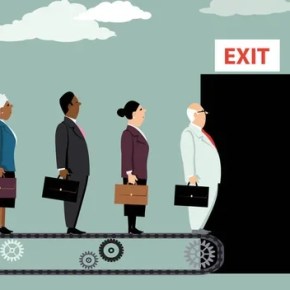
Firing The Government: Inside the Largest Federal Workforce Reduction in U.S. History
Executive Summary Introduction Since the beginning of 2025, sweeping layoffs across the federal government have resulted in the dismissal of over 30,000 employees. The primary sector of federal workers facing cuts are those in their probationary period. Civil servants remain on probation for one year after they are hired, promoted, or demoted. While on probation, … Continue reading

Rethinking Occupational Licensing: Breaking Barriers
Executive Summary Introduction Occupational licensing reform has gained traction at both state and federal levels in recent years, geared towards eradicating unnecessary barriers that restrict employment opportunities. Laws regarding licensure cover nearly one-third of the U.S. workforce, creating barriers to entry rather than a safeguard for the public interest. Although licensing raises the wages … Continue reading

Impact of Retail Electricity Deregulation on Consumer Prices: A Difference-in-Difference Approach
Executive Summary Introduction Electricity has become the most fundamental commodity in the United States. Its growing influence underpins nearly every major industry. It powers homes, infrastructure, and manufacturing. Innovation and technological development for the entire economy depends on efficient and reliable energy transmission. Utilities markets in the U.S. have historically been viewed as natural monopolies. … Continue reading

How Biden Helped to Create Trump’s Unilateral Trade Policy Process
Executive Summary Introduction Throughout his time in office, President Biden was a persistent advocate of innovative executive branch tactics to restrict trade volumes and capital flows in and out of the United States. While Biden did not engage in the brinkmanship negotiation strategies President Trump has used over the past month, he did use the … Continue reading

Debt / Economy / Fiscal policy / Trade
The Twin Deficit Hypothesis: An Analysis of the U.S.
Executive Summary Introduction Government deficits and the trade balance have seemed to fluctuate in tandem over time. This has given rise to theories connecting the two deficits to explain their relationship. U.S. fiscal deficits have ballooned in recent years, bringing renewed attention to the twin deficit hypothesis (TDH) and applying it to advanced economies. Modeling … Continue reading

The State of State Backed Insurance
Executive Summary Introduction The purpose of insurance is to mitigate the risks of a probable loss for consumers. Some consumers are inherently riskier to insure than others simply based off where they choose to live. This causes many property and casualty (P&C) insurers to demand higher rates or forego plans completely. In the instance a … Continue reading
 Policy Interns
You must be logged in to post a comment.