Executive Summary: President Trump’s frequently changing tariffs increased uncertainty for many businesses owners. This uncertainty could potentially damage the economy by reducing investment and new research and development processes. Polymarkets allow anyone to bet on an outcome by buying a yes share or a no share, with the price of a yes share corresponding to … Continue reading
Tag Archives: Economy

Trump’s policies will increase home prices in a long-suffering housing market
Executive Summary Housing in the United States reached a new low in terms of affordability in May 2025, according to The Federal Reserve Bank of Atlanta’s Home Ownership Affordability Monitor, largely because of a lack of supply in the housing market. President Trump’s main policy strategies, raising tariffs and decreasing the immigrant population in the … Continue reading
Debt / Economy / Technology
Stablecoin Issuers as a Growing Class of Treasury Buyers: Implications and Risks
Executive Summary With the passage of the GENIUS Act, which sets a framework for future stablecoin legislation, the growing stablecoin market raises concerns over its impact on U.S. Treasury yields. Studies show that increased demand from stablecoin issuers for short-dated Treasury bills may have a similar influence on yields as a rate cut from the … Continue reading

The Trade-Off Behind the Trade Deficit
Executive Summary President Trump aims to rebalance global trade by imposing tariffs and welcoming a weaker dollar because he views the U.S.’ large trade deficit as evidence of unfair trade practices. However, shrinking the trade deficit will shrink the capital account surplus that balances it, thereby weakening the dollar as foreign investors move away from … Continue reading

‘Golden share’ of U.S. Steel extends president’s reach into the private sector
Executive Summary Nippon Steel’s acquisition of U.S. Steel was blocked by both Biden and Trump until Nippon, a Japanese company, gave the federal government a “golden share” of U.S. Steel. The share gives the executive branch permanent control over U.S. Steel’s board of directors, job relocations, and capital investments. The executive influence over this deal … Continue reading
We Know Little About Post-2012 Oil Shocks
Note this post was written on June 17, 2025 and does not reflect subsequent events. EXECUTIVE SUMMARY The pre-2012 consensus that increases in oil prices had a large negative effect on US output is no longer reliable. New evidence suggests oil price moves up to $115 per barrel will have an insignificant effect on total … Continue reading
America / Debt / Economy / Fiscal Cliff / Fiscal policy / Politics / Tariffs / Taxes / Trade / U.S. Domestic Policy
Recession Risk in 2025: A Weighted Logit Model with Policy Insights
An overheating economy, high policy uncertainty, and declining consumer confidence pose recession risks of 53 percent as of April 2025. This paper employs a weighted logit model to aid policymakers in early intervention. Key indicators include consumer expenditure, yield curve, disposable income, and economic policy uncertainty, enhancing prediction accuracy in recession modeling. Continue reading
What will sector-specific tariffs cost?
Executive Summary Although President Trump has paused his April 2 “Liberation Day” tariffs for 90 days, he continues to threaten imposing sector-specific tariffs in the near future. The threatened sectors include pharmaceuticals, copper, lumber, chemicals and minerals, semiconductors, and energy, which combined account for roughly 20-percent of U.S. imports. This research estimates that if the … Continue reading

A Drop in Consumer Sentiment: Economic Consequences and Policy Impacts
Executive Summary The Council of Economic Advisers (CEA) Chair Stephen Miran stated on March 25th he does not believe there is a strong relationship between consumer sentiment and consumer spending in recent years. Miran says this after a 9.76 percent decrease in consumer sentiment from February to March, marking the largest drop since January 2021, … Continue reading
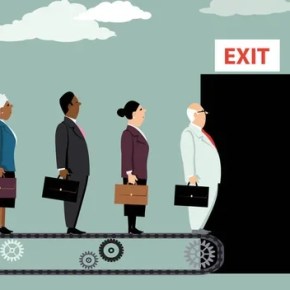
Firing The Government: Inside the Largest Federal Workforce Reduction in U.S. History
Executive Summary In November 2024, the federal government employed over three million people, accounting for about 1.87 percent of the civilian workforce. Since the new administration took office in January, over 30,000 federal workers have been notified of termination, indicating that nearly one percent of the federal workforce has been cut. The proposed initiative to … Continue reading


You must be logged in to post a comment.