Executive Summary: President Trump’s frequently changing tariffs increased uncertainty for many businesses owners. This uncertainty could potentially damage the economy by reducing investment and new research and development processes. Polymarkets allow anyone to bet on an outcome by buying a yes share or a no share, with the price of a yes share corresponding to … Continue reading
Latest Entries

Trump’s policies will increase home prices in a long-suffering housing market
Executive Summary Housing in the United States reached a new low in terms of affordability in May 2025, according to The Federal Reserve Bank of Atlanta’s Home Ownership Affordability Monitor, largely because of a lack of supply in the housing market. President Trump’s main policy strategies, raising tariffs and decreasing the immigrant population in the … Continue reading
The GENIUS Act Should Apply to Yield-Bearing Stablecoins As Well
Note this post was written July 11, 2025 and does not reflect subsequent developments. EXECUTIVE SUMMARY The US Senate passed the GENIUS Act on June 17, promising a stable regulatory framework for stablecoin issuers. The GENIUS Act excludes yield-bearing stablecoins from its regulatory framework. Citi estimates this would stifle stablecoin’s bull-case, medium-term market capitalization by … Continue reading
Debt / Economy / Technology
Stablecoin Issuers as a Growing Class of Treasury Buyers: Implications and Risks
Executive Summary With the passage of the GENIUS Act, which sets a framework for future stablecoin legislation, the growing stablecoin market raises concerns over its impact on U.S. Treasury yields. Studies show that increased demand from stablecoin issuers for short-dated Treasury bills may have a similar influence on yields as a rate cut from the … Continue reading

The Costs of Submarine Cable Disruptions to the United States
Executive Summary The U.S. government and corporations do not release data on the price of submarine cable faults, raising concerns for national preparedness. Fiber-optic submarine cable faults cost the U.S. an estimated $22-$90 million annually. Power submarine cable faults cost the U.S. $12-$116 million to repair annually. The indirect costs of repair can range from … Continue reading
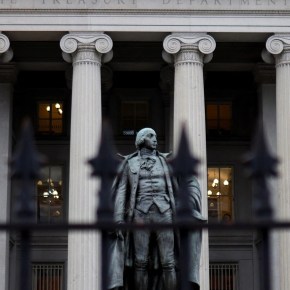
Regulating in the Dark: eSLR Reform Without Precedent
A June 27 joint proposal by the Federal Reserve, FDIC, and OCC to lower the enhanced supplementary leverage ratio (eSLR), a capital constraint on large banks, aims to remove regulatory disincentives to Treasury security intermediation. While myriad studies and analyses conclude that the eSLR disincentivizes intermediation, removing these constraints equally benefits competing low-risk activities that may offer higher returns. Banks may deploy freed capital toward higher-yielding activities rather than Treasury intermediation, potentially undermining the rule’s intended purpose. Continue reading

The Trade-Off Behind the Trade Deficit
Executive Summary President Trump aims to rebalance global trade by imposing tariffs and welcoming a weaker dollar because he views the U.S.’ large trade deficit as evidence of unfair trade practices. However, shrinking the trade deficit will shrink the capital account surplus that balances it, thereby weakening the dollar as foreign investors move away from … Continue reading

‘Golden share’ of U.S. Steel extends president’s reach into the private sector
Executive Summary Nippon Steel’s acquisition of U.S. Steel was blocked by both Biden and Trump until Nippon, a Japanese company, gave the federal government a “golden share” of U.S. Steel. The share gives the executive branch permanent control over U.S. Steel’s board of directors, job relocations, and capital investments. The executive influence over this deal … Continue reading
We Know Little About Post-2012 Oil Shocks
Note this post was written on June 17, 2025 and does not reflect subsequent events. EXECUTIVE SUMMARY The pre-2012 consensus that increases in oil prices had a large negative effect on US output is no longer reliable. New evidence suggests oil price moves up to $115 per barrel will have an insignificant effect on total … Continue reading

The Tech Industry’s Transition to 24/7 Carbon-Free Energy
Executive Summary Artificial Intelligence (AI) is increasing the technology sector’s electricity demand, with data center energy use projected to more than double by 2030. This limits tech companies’ ability to meet renewable energy targets that were originally pledged in a less energy-intensive market. Google and Microsoft have implemented 24/7 Carbon-Free Energy (CFE) in their facilities, … Continue reading


You must be logged in to post a comment.