Executive Summary U.S. M&A transaction value rose roughly 50 percent year over year in 2025, with four mega-mergers above $40 billion versus none in 2024. This happened despite total deal count falling 4 percent. The surge was driven almost entirely by the top of the market: deals over $10 billion grew 120 percent, while those … Continue reading
Tag Archives: Finance
Why Young Americans Must Turn from Government Intervention and Reform Entitlements
Executive Summary The national debt is fundamentally a generational issue; running large budget deficits to finance tax cuts or spending increases today places an undue burden on younger and future generations. By borrowing more today, policymakers are effectively promising higher taxes and lower spending on future taxpayers and government beneficiaries; at the very least, younger and future … Continue reading

IRS Layoffs Stall Implementation of Republican-Backed Tax Simplification
EXECUTIVE SUMMARY• The Trump administration furloughed almost half of Internal Revenue Services (IRS) employees and issued 1,300 layoffs during the October 2025 shutdown.• The cuts have delayed implementation of the One Big Beautiful Bill (OBBB), making Republicans’ tax-simplification effort appear inefficient and disorganized.• Businesses and individuals now face higher costs as they rely more on … Continue reading
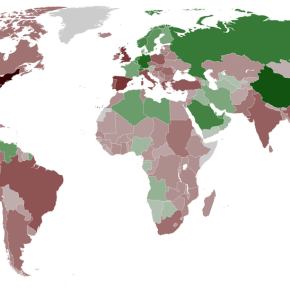
Money Supply and the Current Account: Testing the Predictions of the AA-DD Model
Executive Summary: Policymakers have increased attention to current account deficits. Though experts debate whether current account deficits negatively impact the economy, many have also put forward theories regarding the influence of money supply on the current account. The classic AA-DD model predicts that in the short term, an increase in money supply should result in … Continue reading

The Impact of AI Efficiency Gains on National Debt and Gross Domestic Product
Aryan Mirchandani Executive Summary The recent AI boom has prompted policymakers to forecast exponential GDP growth in the near term, easing pressure on officials to act against rising national debt levels. The Trump Administration has utilized the AI efficiency boom to continue large levels of fiscal spending, as it implores that this boom will decrease … Continue reading

Treasury Outlines OBBB Tax Implementation as Compliance Costs Remain Elevated
EXECUTIVE SUMMARY• Department of the Treasury briefed House of Representatives lawmakers on the schedule for rolling out tax provisions of the One, Big, Beautiful Bill (OBBB).• Internal Revenue Service (IRS) paperwork data show that core returns and schedules tied to these provisions require 3.5 billion hours and over $139 billion annually in compliance costs.• Compliance … Continue reading
Debt / Economy / Technology
Stablecoin Issuers as a Growing Class of Treasury Buyers: Implications and Risks
Executive Summary With the passage of the GENIUS Act, which sets a framework for future stablecoin legislation, the growing stablecoin market raises concerns over its impact on U.S. Treasury yields. Studies show that increased demand from stablecoin issuers for short-dated Treasury bills may have a similar influence on yields as a rate cut from the … Continue reading

The Trade-Off Behind the Trade Deficit
Executive Summary President Trump aims to rebalance global trade by imposing tariffs and welcoming a weaker dollar because he views the U.S.’ large trade deficit as evidence of unfair trade practices. However, shrinking the trade deficit will shrink the capital account surplus that balances it, thereby weakening the dollar as foreign investors move away from … Continue reading
We Know Little About Post-2012 Oil Shocks
Note this post was written on June 17, 2025 and does not reflect subsequent events. EXECUTIVE SUMMARY The pre-2012 consensus that increases in oil prices had a large negative effect on US output is no longer reliable. New evidence suggests oil price moves up to $115 per barrel will have an insignificant effect on total … Continue reading
America / Debt / Economy / Fiscal Cliff / Fiscal policy / Politics / Tariffs / Taxes / Trade / U.S. Domestic Policy
Recession Risk in 2025: A Weighted Logit Model with Policy Insights
An overheating economy, high policy uncertainty, and declining consumer confidence pose recession risks of 53 percent as of April 2025. This paper employs a weighted logit model to aid policymakers in early intervention. Key indicators include consumer expenditure, yield curve, disposable income, and economic policy uncertainty, enhancing prediction accuracy in recession modeling. Continue reading


You must be logged in to post a comment.