Three Jurisdictions, One Carbon Price: Inside the Washington-California-Québec Cap-and-Trade Linkage 
Energy / Environment

Three Jurisdictions, One Carbon Price: Inside the Washington-California-Québec Cap-and-Trade Linkage 

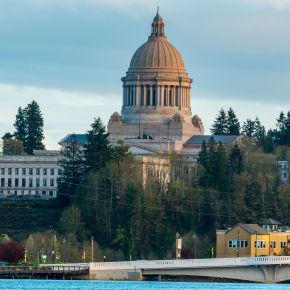
On June 25, 2026, officials from Washington, California, and Québec signed an agreement to merge their cap-and-trade systems. Once linkage takes effect, which is expected in 2027, the shared carbon market will cover roughly 75 percent of greenhouse gas emissions of two large U.S. states and one Canadian province. Continue reading →
Pax Moo-ica: Supply Management and the USMCA
Economy / Politics / Tariffs / Trade

Pax Moo-ica: Supply Management and the USMCA

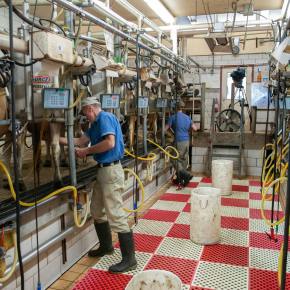
 Executive Summary  One of the United States’ main goals for the 2026 United States-Mexico-Canada Agreement (USMCA) review is to open the supply-managed Canadian dairy market.  This has been a continuous objective of Washington’s for decades; since 2020, inroads have been achieved, but the scope of such market openings seems unlikely to change in the contemporary geopolitical situation.  For these … Continue reading →

NAFTA Trucking Program Driving Equality for Mexico
Politics

NAFTA Trucking Program Driving Equality for Mexico

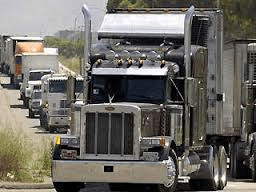
The 1994 passage of the North American Free Trade Agreement (NAFTA) was a major commitment to bolstering the interconnectedness between the United States and Mexico. Since implementation, the two countries have continued to realize increased economic growth and efficiency gains from integrated production. In 2012, Mexico was the second largest goods export destination for the … Continue reading →

Geopolitical Impacts and Pokemon: Looking for a Bipartisan Voice Amidst an Oil Boom
America / Energy / Environment / Environmental Regulation / Foreign Policy / Regulation

Geopolitical Impacts and Pokemon: Looking for a Bipartisan Voice Amidst an Oil Boom

The Bipartisan Policy Center recently hosted an event discussing the geopolitical impacts of the US’s recent tight oil boom. Tight oil, or shale oil, production has increased with the expansion of hydraulic fracturing technology used to access shale gas from shale or sandstone formations. Amidst the rallying cries of a “qualified abundance” instead of a … Continue reading →